- Ken Cato's Newsletter
- Posts
- Adapting to the Jobs of Tomorrow

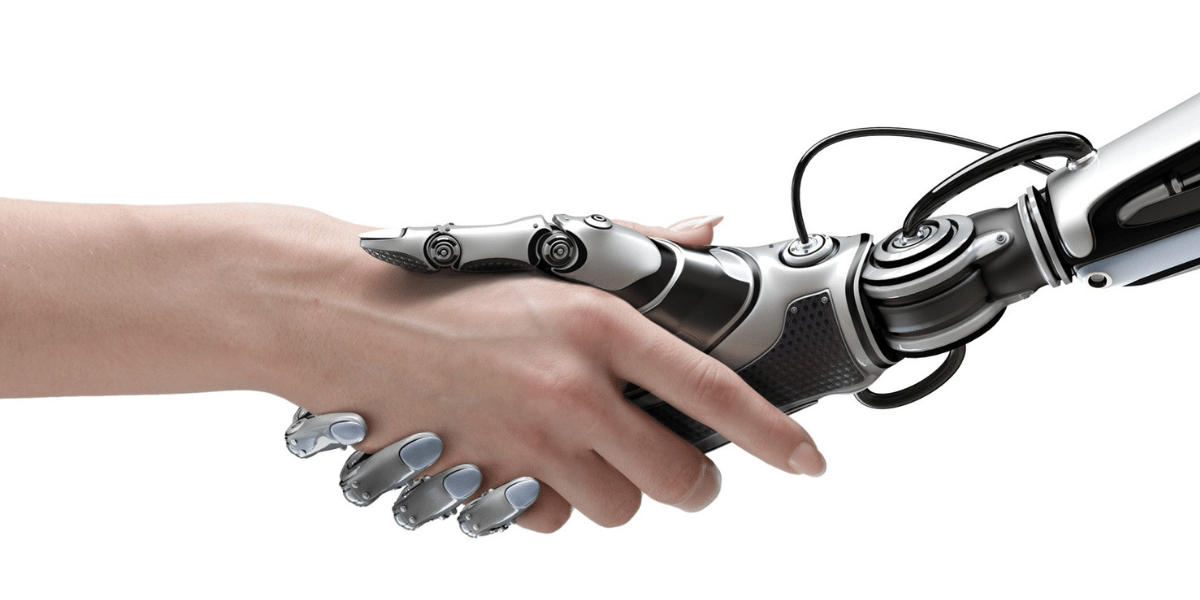
Welcome to the future of work, where AI and robotics aren’t just tools, they’re your colleagues, collaborators, and maybe even your next career opportunity.
In this newsletter, we’ll explore how technology is reshaping jobs, the skills you’ll need to thrive, and how you can prepare for the changes ahead.
Whether you’re a student, professional, or business leader, this is your roadmap to staying ahead in a world where humans and machines work side by side.
The Changing Landscape of Work
Work has always evolved. Here’s a quick journey through time:
10,000 BCE: 100% of humans were hunter gatherers.
1800s: 60–80% were farmers, with artisans and merchants filling the gap.
Today: In advanced economies, services like healthcare, tech, and retail dominate.
But the future? It’s a whole new ballgame. By 2050, projections suggest:
Agriculture: Down to 1% from 27% today.
Industry: Shrinking to 5–10% from 23%.
Services: Surging to 70–75%.
Tech-Specialized Roles: A massive leap to 20–25%.
What’s driving this? Automation. Robots and AI are taking over routine tasks, freeing humans to focus on creativity, strategy, and innovation.

The Rise of AI and Robotics
Technology is no longer just supporting us, it’s leading the charge.
Here’s how:
Healthcare: AI-driven drug discovery is cutting years off research timelines, while advanced diagnostics detect diseases earlier and more accurately than ever.
AI-powered robotic surgery is also enhancing precision and recovery times.Manufacturing: Intelligent robots optimize production lines, predict maintenance needs before breakdowns, and reduce waste, making factories smarter and more efficient.
Retail & E-Commerce: AI personalizes shopping by anticipating your needs before you even search, while autonomous warehouses fulfill orders at record speeds.
Transportation & Logistics: Self-driving vehicles and AI-optimized delivery routes are slashing costs and emissions, making global trade faster and greener.
Education & Knowledge Work: AI tutors provide personalized learning experiences, while digital assistants automate tedious tasks, allowing professionals to focus on high-value work.
Agriculture & Sustainability: Autonomous drones and smart sensors optimize crop yields, reduce water waste, and help fight food insecurity.
Law & Finance: AI accelerates legal research, detects fraud in real-time, and automates financial forecasting with unprecedented accuracy.
Creative & Content Creation: AI is revolutionizing design, music, and storytelling, assisting creators while pushing the boundaries of human imagination.
And it’s not just startups, tech giants are all in:
NVIDIA’s AI chips are powering the next generation of computing.
Tesla’s Optimus robot will be soon be assembling cars (or even helping at home).
OpenAI and Manus are building AI models that can write, design, and think.
As Sam Altman, CEO of OpenAI, puts it: “AI will create more jobs than it destroys, but the transition will be painful.” The key? Adapt fast.
Workforce Shift Over Time
Replaced by AI/Robots:
Routine, repetitive tasks: Manufacturing, logistics, data entry, basic and mid level coding.
24/7 jobs: Customer service, surveillance, low skill assembly lines.
Human-Dominant Roles:
Creativity: Artists, designers, and content creators.
Empathy driven professions: Educators, and social workers.
Strategic leadership: High level decision making in business and governance.
Sectors of the Future
So, where will the jobs be? Here are some fields set to explode:
AI and Robotics
AI trainers and explainability experts.
Robotics maintenance and integration specialists.
AI ethics consultants and governance officers.
Climate and Sustainability
Carbon sequestration technicians.
Renewable energy engineers (solar, wind, fusion - Earth and Space).
Environmental restoration managers.
Space Exploration
Asteroid mining engineers.
Space habitat designers.
Interplanetary logistics specialists.
Web3 and Decentralized Systems
Blockchain architects.
Digital identity managers.
Decentralized finance (DeFi) advisors.
Creative and Emotional Intelligence-Based Roles
Virtual world designers (metaverse).
Therapists and coaches for AI-human relationships.
Advanced content creators using AI tools.
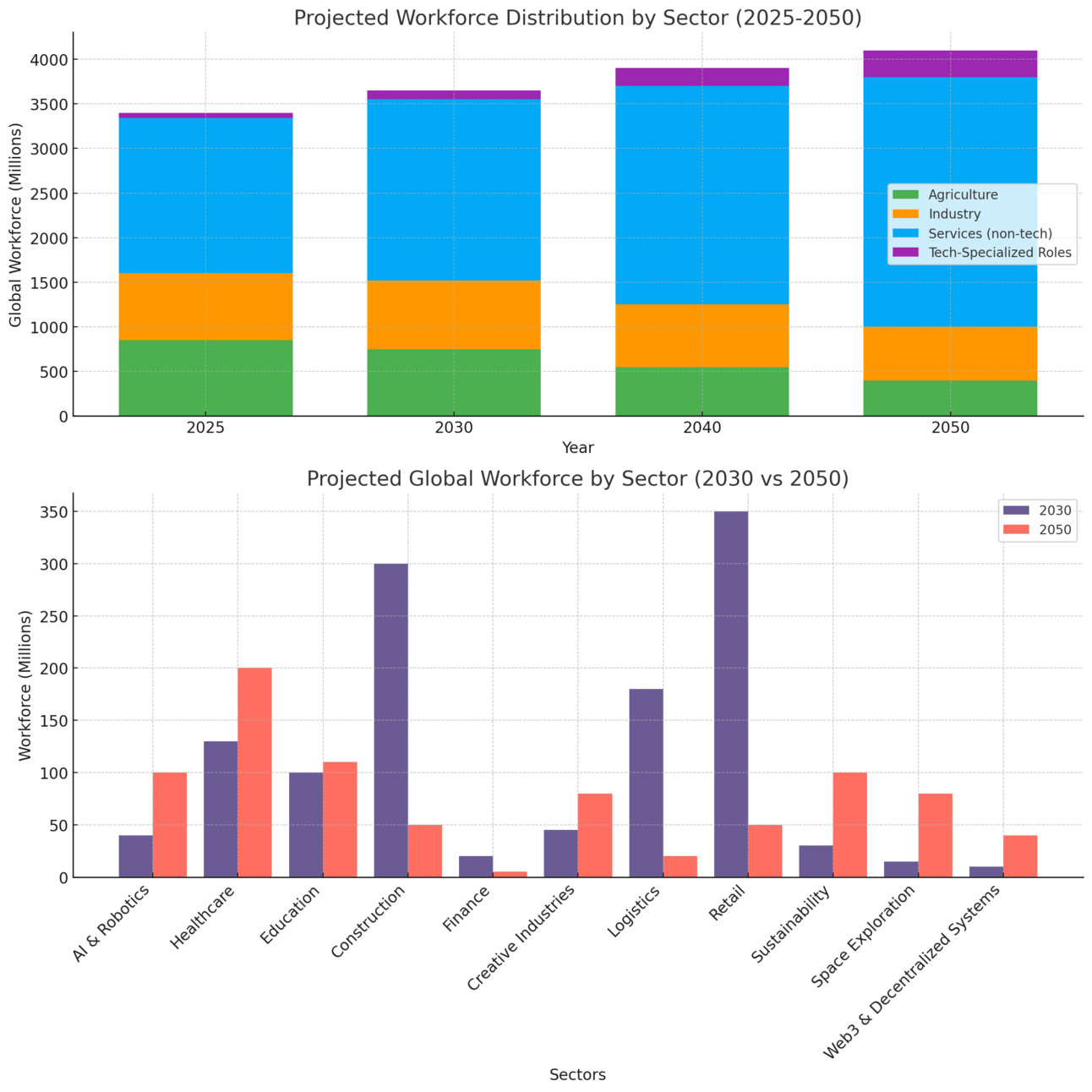
These aren’t sci-fi fantasies, they’re the careers of tomorrow, blending tech smarts with creative problem solving.
Skills for Tomorrow
To thrive in this new world, you’ll need a mix of hard and soft skills:
Technical Skills: Learn to use coding tools (Cursor), analyze data, or experiment with AI tools to bring your ideas to life. Not sure where to start? Try free courses on Coursera or edX.
Soft Skills: Creativity, emotional intelligence, and strategic thinking will be your superpowers. Hone them by taking on diverse projects, volunteering, or even practicing mindfulness. Elevate your baseline in all aspects of life to unlock your full potential.
Why? Because as AI researcher Fei-Fei Li says, “Emotional intelligence will be the currency of the future.” Robots can crunch numbers, but they can’t inspire a team or dream up the next big idea.
1. Technical Skills (Base)
These foundational skills are essential for humans to work alongside AI and robotics as they take over routine and repetitive jobs.
Programming: Coding skills to develop, customize, and maintain AI systems.
Data Analysis: Interpreting data generated by AI to make informed decisions.
Machine Learning: Understanding and optimizing AI algorithms.
Robotics: Managing and improving robotic systems in industries like manufacturing or healthcare.
Cybersecurity: Protecting AI and robotics infrastructure from threats.
Why it matters: As AI and robotics handle more tasks, humans need these skills to manage, optimize, and innovate with technology.
2. Intermediate Skills (Middle)
These skills help humans adapt to rapid changes and collaborate effectively in a world dominated by AI and robotics.
Project Management: Coordinating human and AI efforts to achieve goals.
Communication: Explaining technical concepts to non experts and fostering teamwork.
Adaptability: Adjusting to new tools, technologies, or job requirements.
Problem Solving: Addressing challenges that AI can’t fully resolve.
Collaboration: Working seamlessly with both humans and machines.
Why it matters: These skills ensure humans can thrive in dynamic environments and bridge the gap between technology and people.
3. Soft Skills (Top)
As AI and robotics take over technical and routine work, these uniquely human skills will become the most valuable and sought-after.
Emotional Intelligence: Understanding and managing emotions, critical for roles involving human interaction.
Creativity: Generating new ideas and solutions that AI can’t replicate.
Critical Thinking: Making strategic decisions and solving complex problems.
Leadership: Guiding teams and organizations through technological change.
Empathy: Building trust and connection, especially in fields like healthcare or education.
Why it matters: Soft skills will set humans apart from machines, enabling them to lead, innovate, and connect in ways AI cannot.
Socioeconomic Implications
AI and robotics are reshaping the workforce, but the transition is anything but smooth. How these technologies impact our future depends largely on decisions made by governments and corporations, decisions that most of us have little control over.
While big companies can afford cutting edge AI and robotics, the average person cannot. This disparity threatens to widen inequality, disrupt jobs, and force millions to adapt or be left behind. Today, the top 12% of earners control 52% of global income, AI is poised to push that gap even further.
There’s no single solution, but understanding the stakes and taking action can help us prepare. Let’s break it down.
The Challenges
Job Displacement: Automation is already replacing repetitive, low-skill jobs, factory work, retail checkouts, even white-collar tasks. Countries adopting AI the fastest will see the biggest disruptions.
Widening Wealth Gap: AI and robotics require massive investments, meaning corporations and wealthy nations will profit while displaced workers may see wages stagnate or disappear altogether.
Uneven Policy Responses: Some governments may regulate AI or invest in worker support; others may not. Without intervention, corporate interests, maximizing profit over people, could accelerate inequality.
Popular Solutions (And Why They Fall Short)
Universal Basic Income (UBI): The idea of guaranteed income sounds promising, but real-world trials show mixed results. Small-scale programs improve well-being, but scaling them up? Funding is a major hurdle, and it doesn’t fully address job loss frustrations.
Reskilling Programs: Teaching workers new skills is crucial, but technology evolves faster than education systems can keep up. Plus, not all training programs are accessible, effective or equal in quality.
Regulation: Some propose taxing robot-driven profits or slowing automation through policy. However, governments are slow to act, and corporations often find loopholes.
What Could Work?
While no perfect solution exists, these ideas are gaining traction:
Tech Equity Policies: Taxing AI-driven profits to fund social programs could help balance economic shifts. Politically difficult, but increasingly discussed.
Localized Strategies: Different regions may need different solutions, some could implement job guarantees, while others focus on tech subsidies or worker protections. Corporations may face pressure to reinvest locally.
Education Reform: Schools must teach adaptability and digital literacy from an early age. Lifelong learning should become the norm, not the exception.
Preparing for the Future
The key to thriving in an AI-driven world? Adaptation. Here’s how:
For Individuals:
Keep learning, AI evolves fast, and so should you.
Build an online presence or community (X, LinkedIn, YouTube, Skool, or Newsletters) to showcase your skills/knowledge or personal business.
Join tech communities, attend virtual workshops, and stay curious.
Not sure where to start? Try a free AI course or connect with industry professionals.
For Businesses:
Invest in AI to boost productivity, but don’t neglect your workforce.
Reskill employees and foster a culture of continuous learning.
Follow examples like ServiceNow, which uses AI to enhance jobs, not eliminate them.
💡 The future isn’t humans vs. machines, it’s humans working with machines.
What You Can Do
We can’t wait for governments or corporations to figure this out.
Here’s how you can stay ahead:
✅ Advocate for Change: Support policies that protect workers, not just executives.
Get involved, join advocacy groups, vote for leaders pushing fair AI regulations, and contribute to discussions shaping the future.
✅ Build Local Resilience: Strengthen your community. Create skill-sharing networks, support worker cooperatives, or launch local businesses to create stability in uncertain times.
Stay ahead, stay informed, and embrace the future of AI + Robotics.
The best time to upskill was yesterday.
The second best time?
Today.
The worst decision you can make is to do nothing.
Forward this to someone who needs to hear it.
Everyday is a new Adventure, so Create your Reality by Design with Intent and Chase the Wonder.
See you next Sunday
Ken Cato Co-Founder Next Systems AI
Book a 1:1 Call